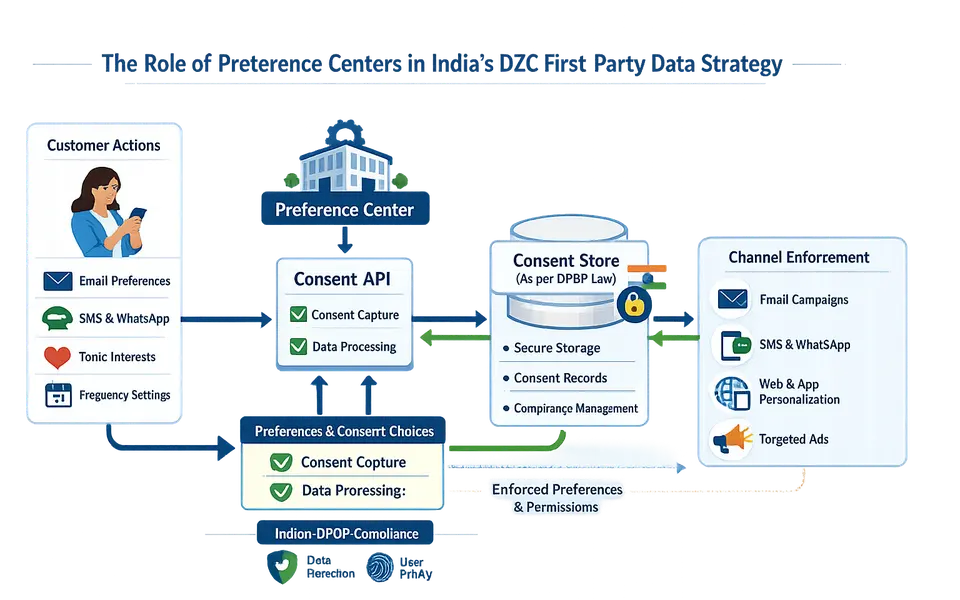
H
How to Build a Preference Center for D2C Brands
Build a D2C preference centre with purpose and channel controls, consent evidence, identity resolution, propagation SLAs, withdrawal and QA.
Retail, D2C and e-commerce teams process personal data across a customer journey that rarely stays in one system. Acquisition tools, storefronts, payment providers, marketplaces, warehouses, 3PLs, CRM, loyalty, support and analytics each receive a different slice. A useful DPDP programme therefore follows the journey and purpose, not the org chart. Current status, verified 29 August 2026: most substantive DPDP duties are notified but scheduled to commence around May 2027.
At acquisition, distinguish optional marketing and profiling from data needed to answer a request or create an account. Give a clear purpose-specific choice, record the notice version and channel, and keep advertising and analytics SDKs gated until the relevant state is resolved. Do not turn a discount, spin wheel or pre-checked box into forced agreement for unrelated purposes.
At checkout and fulfilment, collect only the information needed to price, accept payment, prevent fraud, deliver, communicate order status and meet applicable tax or consumer duties. Map which entity determines each purpose: the brand may be the Data Fiduciary for the order, while a payment service, marketplace or logistics provider may act in different roles for different processing. Document those roles activity by activity and contractually govern processors, sub-processors, security, incident escalation, retention and deletion support.
After purchase, separate service messages from promotions. An order update, recall or fraud alert should not depend on a marketing subscription. Loyalty, personalisation, cross-sell, replenishment and audience creation need their own purpose and control logic. A preference centre should allow channel and topic choices, while a withdrawal event must suppress optional processing across campaign tools, CDPs, call-centre lists and downstream partners within a measured service level.
Returns, support and disputes create additional records. Keep evidence required for refunds, warranties, fraud investigation, tax, accounting and legal claims for the justified period; erase or anonymise residual browsing, abandoned-cart, campaign and profiling data when its purpose ends and no legal reason remains. Maintain a record-level retention schedule rather than one blanket period for every customer dataset.
Rights operations need identity checks proportionate to risk and a system map that can locate customer data across storefront, ERP, CRM, marketing, support, warehouse and processor systems. Record search scope, corrections, erasure exceptions, processor responses and the final communication. Test shared phone numbers, guest checkout, merged accounts and marketplace-originated orders because they expose identity-resolution errors.
Track outcomes that reveal control quality: optional-purpose acceptance without dark patterns, withdrawal completion, suppression latency, stale audience membership, processor acknowledgement, unclassified purpose use, overdue deletion, rights-request ageing and repeat incident causes. Use the linked preference-centre, processor-role, security, breach and retention guides for deeper implementation. This page remains the retail journey owner rather than duplicating those specialist controls.
7 articles
Back to home
Build a D2C preference centre with purpose and channel controls, consent evidence, identity resolution, propagation SLAs, withdrawal and QA.
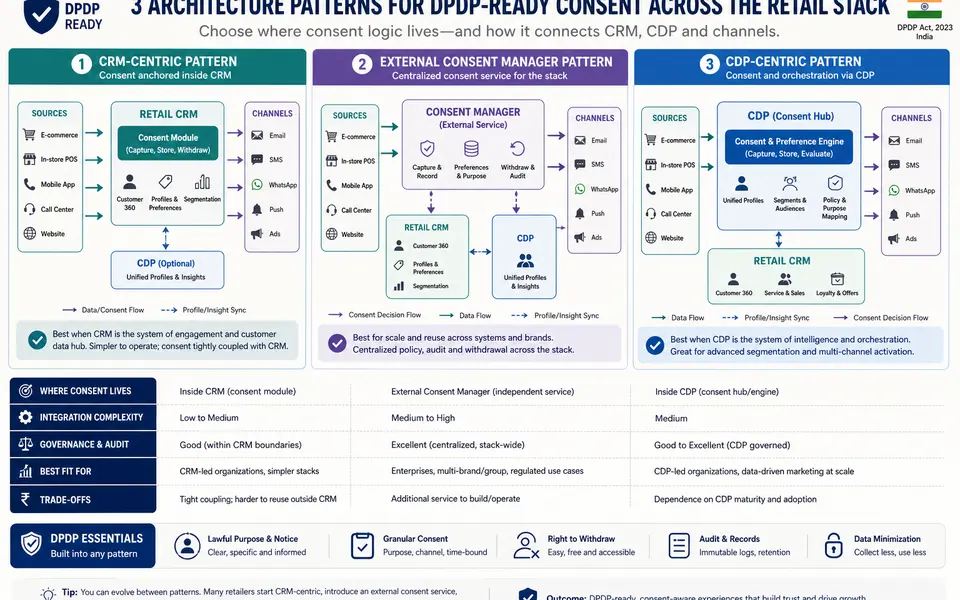
Technical guidance for Indian retail and D2C engineering leaders on designing DPDP-aligned, consent-aware CRM architectures across web, app, POS, and marketing tools.
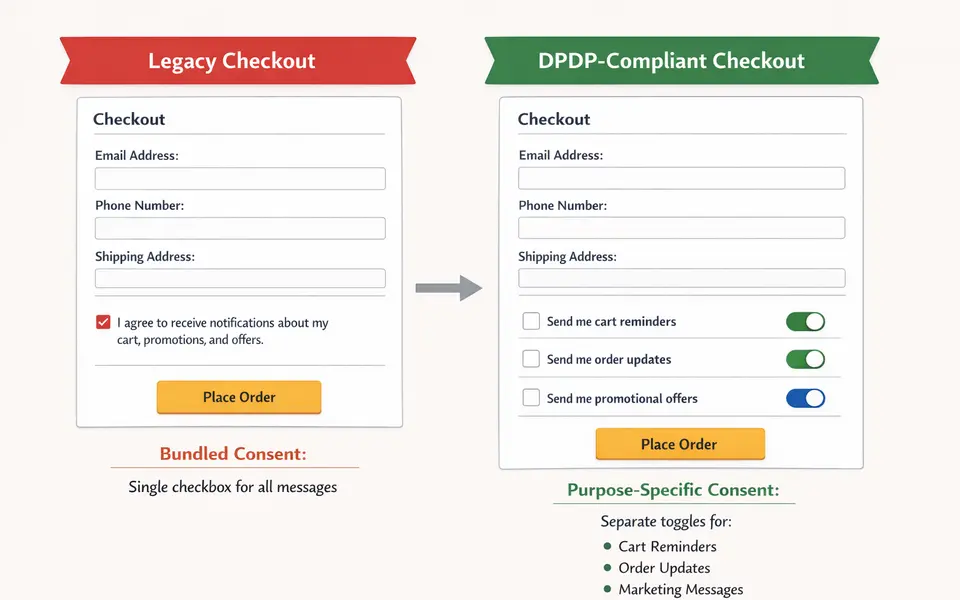
A business-style article for business buyers focused on abandoned carts vs purpose limitation— what retail teams need to know so retail and D2C teams can grow
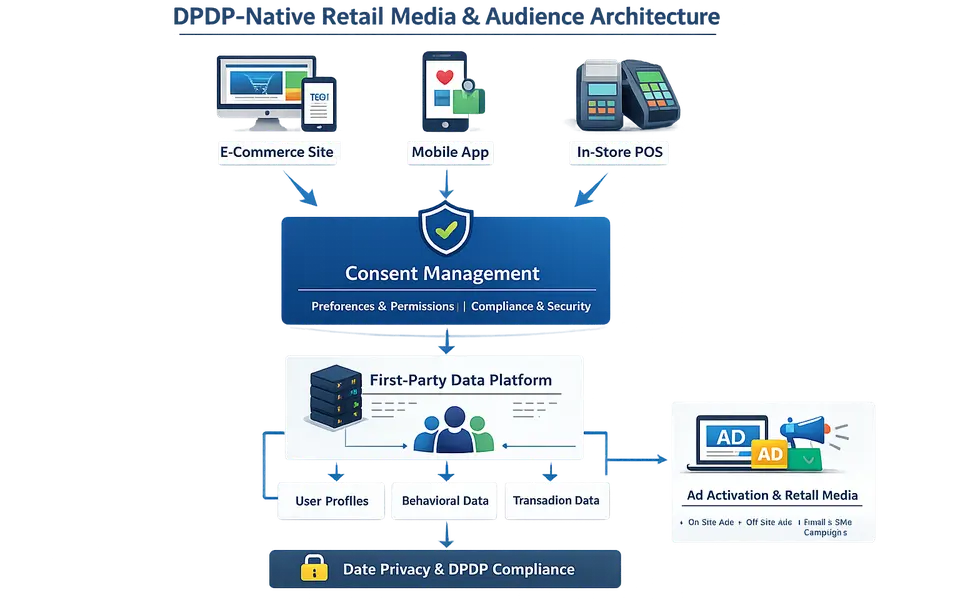
A business-style article for business buyers focused on running retail media and first-party audiences after dpdp so retail and D2C teams can grow first-party
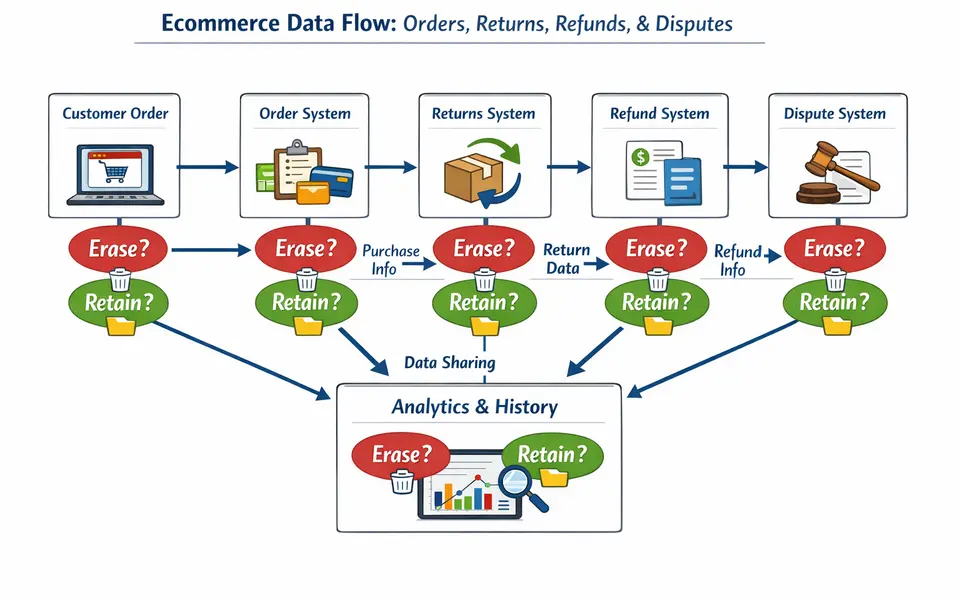
A business-style article for decision-makers focused on right to erasure for ecommerce— returns, refunds, and purchase history so retail and D2C teams can grow
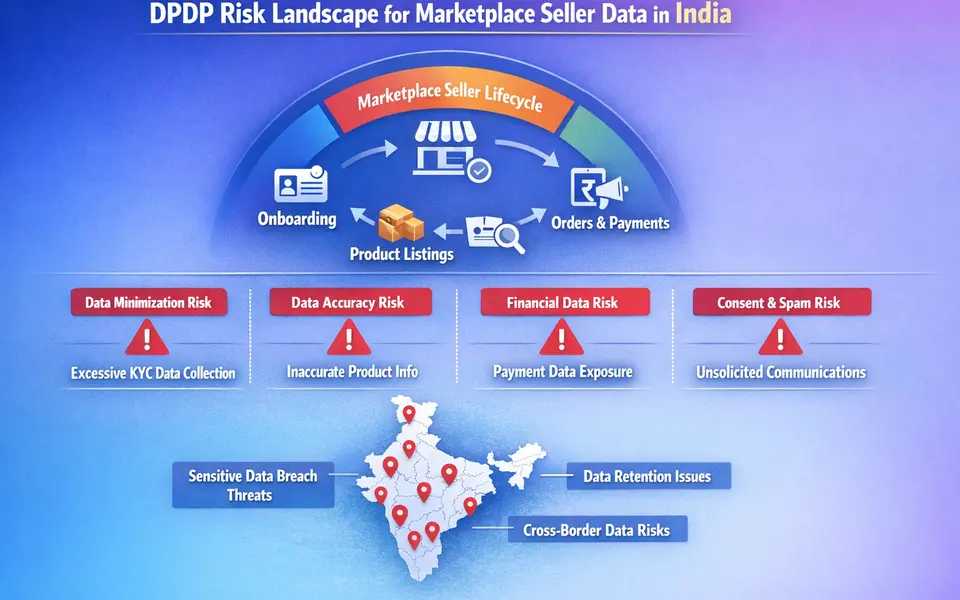
A business-style article for decision-makers focused on managing marketplace seller data without over-collecting so retail and D2C teams can grow first-party
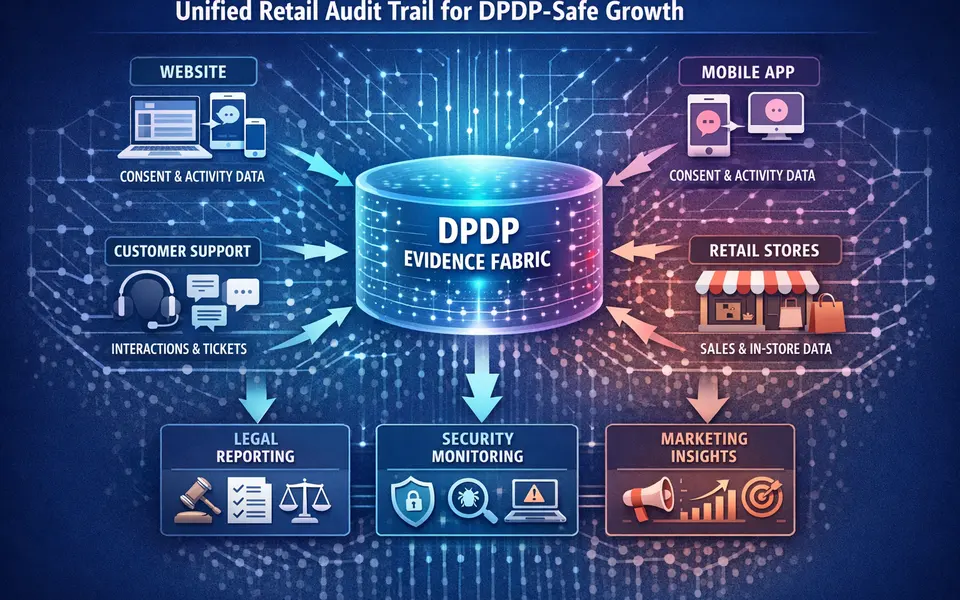
A business-style article for technical evaluators focused on retail audit trail— evidence across web, app, support, and stores so retail and D2C teams can grow
Here to help
Share your details and the team can take it forward from here.